
AI vs. Human Audiobook Narration: A Strategic Guide for Publishers and Authors
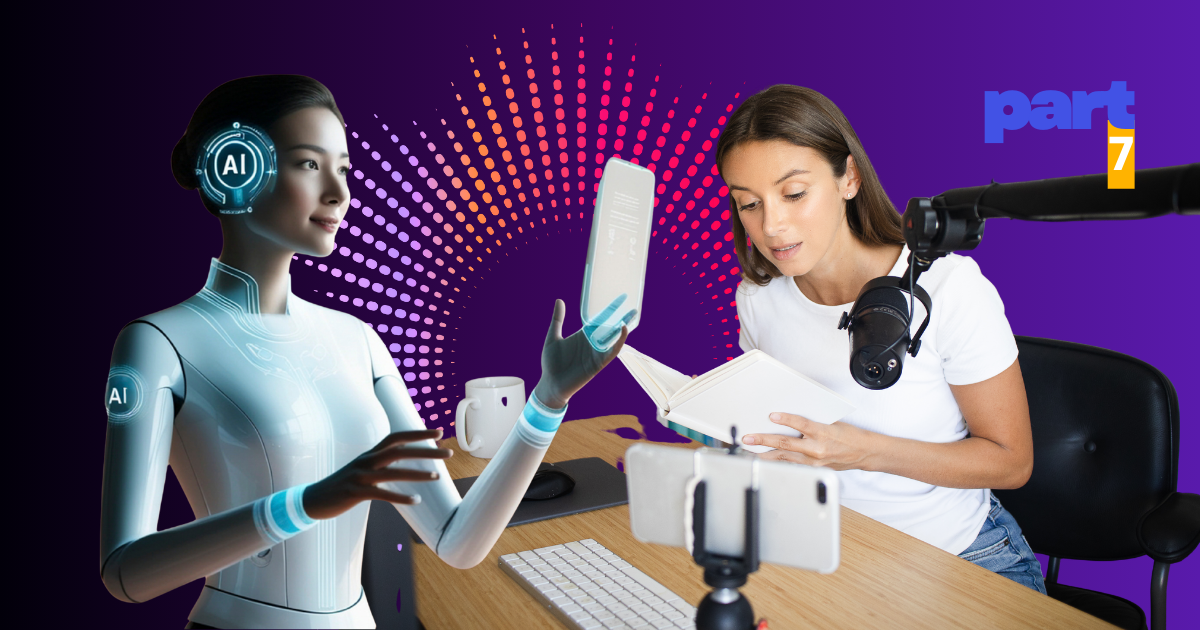
The audiobook market continues its explosive growth trajectory, with revenue projected to surpass $19 billion globally by 2027. Yet for many publishers and authors, a critical gap persists: the majority of their catalog remains unavailable in audio format due to the prohibitive costs and lengthy production timelines of traditional human narration.
The emergence of sophisticated AI narration technology has fundamentally changed this equation. No longer a question of "robotic" versus "natural," today's AI audiobook narration represents a genuine strategic option: one that requires thoughtful evaluation rather than reflexive acceptance or rejection.
This comprehensive guide examines when AI narration serves your catalog best, when human narration remains essential, and how to build a hybrid strategy that maximizes both reach and revenue across your entire publishing portfolio.
Understanding the Current AI Narration Landscape
AI narration technology has matured dramatically over the past three years. Leading platforms like ElevenLabs, Audible's AI program, Apple Books' digital narration, and Google Play's auto-narration have moved well beyond early text-to-speech systems to deliver genuinely readable, intelligible speech suitable for most nonfiction and many fiction works.
All four major platforms now offer multi-language support, though coverage and quality vary considerably by language and specific voice selection. The universal advantages remain compelling: AI narration delivers dramatically faster production timelines and lower costs compared to hiring professional human narrators, fundamentally lowering the barrier to entry for titles that otherwise would never receive audio treatment.
However, understanding where these platforms diverge in quality and capability proves essential for making informed production decisions.
Platform-Specific Strengths in AI Narration
ElevenLabs has established itself as an industry leader for natural prosody, emotional color, and multi-character delivery. The platform's advanced voice design capabilities and fine-grained control options make it particularly well-suited for immersive fiction and audiobooks requiring subtle performance nuance. Publishers willing to invest time in audio direction - adjusting SSML parameters, managing pauses and emphasis, and implementing multi-voice casting-, can achieve remarkably human-like emotional range with ElevenLabs' technology.
Audible's AI program positions itself as production-grade narration with optional human oversight, post-production refinement, and professional proofreading. Their publisher programs aim for quality comparable to traditional studio productions, with strong pacing and polish when publishers utilize Audible-managed or human-in-the-loop workflows. This hybrid approach bridges AI efficiency with human quality control.
Apple Books digital narration focuses on natural, neutral, broadly pleasant listening experiences with excellent intelligibility and pacing. Historically aimed at accessibility and broad catalog expansion rather than dramatic performance, Apple's offering excels for nonfiction, general reading, and accessibility applications. While less likely to match a star narrator's performance nuance, it delivers consistent quality for straightforward content.
Google Play's auto-narration offers convenient, improved-over-early-TTS functionality that works well for straightforward narration and nonfiction content. Particularly effective for low-cost conversion of backlist ebooks, it proves more functional than performative: handling basic narration competently while falling short on highly dramatic dialogue or complex character work unless manually tuned.
Critical Differentiators in AI Audiobook Narration Quality
Control and Tooling Capabilities
The degree of control you can exercise over AI narration varies dramatically by platform. ElevenLabs provides fine-grained control through voice selection, style and emotion prompts, SSML-like direction, multi-voice casting options, and comprehensive editing capabilities with exportable high-quality files. This makes it ideal for authors and publishers who want to micromanage delivery and fine-tune every aspect of performance.
Audible offers end-to-end production options ranging from "Audible-managed" full-service to self-service with publisher tooling and optional human review. This provides strong production workflows and editorial control, though typically through Audible's established production processes rather than direct manipulation.
Apple Books maintains a simpler publisher/partner pathway, converting ebooks to digital narration with less granular voice-directing UI than dedicated TTS studios but tight integration into the Apple Books pipeline for streamlined workflow.
Google Play emphasizes self-serve simplicity: upload your content, choose voice, language, and speed parameters, and the auto-narration generates automatically. While easier for DIY authors, it offers fewer advanced editing controls compared to ElevenLabs or Audible production services.
Multi-Voice Dialogue and Character Work
For fiction requiring distinct character voices, platform capabilities diverge sharply. ElevenLabs leads with explicit multi-voice audiobook toolkits and sophisticated character differentiation options. Audible achieves strong results through their tools combined with human post-production, allowing them to blend voices, employ voice clones, or integrate professional narrators with AI elements.
Apple Books and Google Play deliver functional single-voice narration well but offer limited capability for character lines requiring actor-like variation and distinct characterization.
Pronunciation, Technical Terms, and Language Nuance
Both Audible and ElevenLabs provide robust options for custom pronunciation lists, phonetic tweaks, and manual corrections—ElevenLabs through studio tools, Audible via production workflow and human verification. Apple and Google offer basic pronunciation fixes but less direct fine-tuning capability for complex technical vocabulary or uncommon proper names.
File Quality and Production Standards
Audible and ElevenLabs deliver production-ready files with proper loudness standards, mastering, chapter markers, and complete metadata. Audible particularly enforces strict production standards for titles entering their retail catalog. Apple and Google auto-narration typically outputs ready-to-use audio, though publishers may want additional mastering for premium retail distribution across multiple platforms.
When AI Narration Serves Your Catalog Best
AI narration has evolved into a strategic advantage for specific content categories and business objectives. Understanding these optimal use cases allows publishers to deploy AI narration where it delivers maximum value.
Nonfiction and Educational Content
Technical manuals, business books, self-help guides, and academic texts prioritize information delivery over dramatic performance. AI narration excels in these categories, maintaining consistent pronunciation of technical terminology while delivering clear, comprehensible narration at scale. For a cookbook series or collection of business guides, AI narration makes audio versions economically viable where traditional production costs would have prohibited audio editions entirely.
Rapid Market Testing and Demand Validation
Want to test whether audio demand exists for a particular genre or series before committing to full production investment? AI narration enables quick, affordable pilot versions. Use these to gauge market interest, gather listener feedback, and make data-driven decisions about which titles warrant human narration investment. This approach transforms what was once expensive guesswork into evidence-based decision making.
Time-Sensitive Content
News compilations, market reports, or content tied to current events lose value rapidly. AI narration can bring these titles to market in days rather than the months required for traditional production, capturing revenue while content remains relevant and timely.
International Expansion at Scale
With multilingual AI voices becoming increasingly sophisticated, publishers can test international markets without the complexity and expense of finding native-speaking narrators for each language. This proves particularly powerful for nonfiction titles where cultural nuance in performance matters less than accurate pronunciation and clear delivery.
Backlist Monetization
Your backlist represents substantial untapped audio potential. AI narration transforms dormant titles into revenue-generating audio products. Start with data-driven selection: identify backlist titles with consistent ebook sales but no audio version. These proven performers make ideal AI narration candidates; you already know reader interest exists, and lower production costs accelerate ROI.
When Human Narration Remains Essential
Despite AI advances, human narrators remain irreplaceable for content where emotional depth, character distinction, and nuanced performance drive the listening experience. Understanding these scenarios ensures you invest in human narration where it delivers maximum impact.
Literary Fiction and Complex Narratives
Stories featuring multiple viewpoints, unreliable narrators, or subtle emotional undertones require the interpretive skills only human narrators provide. Skilled narrators don't simply read: they perform, adding layers of meaning through pace, tone, and emphasis that AI cannot yet replicate convincingly.
Character-Driven Genre Fiction
Romance, mystery, thriller, and fantasy genres often succeed or fail based on how effectively narrators bring characters to life. The ability to create distinct voices, convey sexual tension, build suspense, or voice fantastical creatures remains firmly in the human domain. Readers of these genres typically have high expectations for narration quality and character work.
Children's Books
Young listeners respond to the warmth, playfulness, and emotional connection human narrators provide. The ability to adjust performance based on age-appropriate engagement—knowing instinctively when to speed up for excitement or slow down for emphasis—requires human intuition and experience with young audiences.
Author-Narrated Memoirs
When authors share personal stories, their own voice adds authenticity no AI can replicate. The slight quaver when recounting difficult moments or genuine laughter at remembered joy creates intimate connection with listeners. These authentic human moments transform memoirs from information delivery into emotional experiences.
Premium and Flagship Titles
Bestsellers, award winners, and flagship series deserve full production treatment. Human narration for these titles isn't merely about quality: it signals to your audience that these books matter, that you've invested in creating the best possible experience.
Building Your Hybrid Audiobook Strategy: The 70-20-10 Framework
The strategic question isn't whether to use AI narration, but how to deploy it effectively within your overall catalog strategy. At PublishDrive, we see the most successful publishers using AI narration following this practical framework for decision-making:

The 70% – Catalog Expansion Opportunity
For most publishers, approximately 70% of their catalog will never economically justify traditional human narration costs. Production expenses of $2,000-$6,000 per finished hour combined with 6-8 week production timelines make audio editions financially unfeasible for the long tail of your catalog. AI narration suddenly makes this 70% viable, generating some audio revenue from titles that would otherwise produce zero.

The 20% – Testing and Validation Zone
About 20% of catalog sits in a gray area where testing makes strategic sense. These titles show promise but haven't proven themselves as certain audio successes. AI narration is used to validate market demand, then successful titles can be upgraded to human narration for second editions or special releases. This data-driven approach optimizes production budget allocation.

The 10% – Premium Human Investment
Roughly 10% of catalog absolutely demands human performance: bestsellers, critically acclaimed titles, and series with dedicated fan bases expecting premium experiences. These titles justify the investment in professional narrators, full studio production, and comprehensive post-production work.
Understanding the Revenue Reality
According to PublishDrive's 2024 platform data, human-narrated audiobooks generate 7.5x more royalties on average than AI-narrated titles. Of course, this dataset is limited, and it is not based on A/B testing but still shows why human narration remains the gold standard for premium content where investment can be justified.
However, this data also reveals the strategic opportunity: AI narration can still prove profitable for titles that would otherwise have no audio version whatsoever. When evaluating ROI, remember that 7.5x less revenue is infinitely better than zero revenue.
For a backlist title selling 50 copies monthly in ebook format, AI narration might achieve profitability within months, while human narration ROI could take years - if it breaks even at all. The math becomes clear: human narration for titles that can sell sufficient copies to justify the investment, and AI narration to capture audio revenue from everything else.
Implementing Ethical AI Narration: Transparency and Labeling
As AI narration expands throughout the industry, transparency isn't merely ethical: it's smart business that builds long-term consumer trust and protects publishers’ brand reputation.
Clear and Consistent Labeling
Every AI-narrated audiobook should carry clear labeling in all metadata, product descriptions, and marketing materials. At PublishDrive, we also ask for this transparency as our retail partners require us to do so to provide the best user experience for listeners. Use consistent terminology like "AI-narrated" or "Virtual voice narration" across all platforms. This isn't about warning listeners: it's about setting accurate expectations and demonstrating respect for your audience.
The Quality Promise
AI narration is more like as a conscious choice to make more content accessible rather than a compromise on quality. Consistent pronunciation, availability in multiple languages, faster time-to-market for time-sensitive content, and expanded catalog accessibility for audio listeners.
Pricing Transparency
Prices of AI-narrated audiobooks is usually slightly below human-narrated versions. This pricing reflects production cost differences while acknowledging the different value propositions. Some publishers successfully use AI narration to offer "audio starter editions" at accessible price points, then release premium human-narrated versions for dedicated fans.
Author and Narrator Relations
Authors need to be communicated openly about AI narration plans. Many authors appreciate the opportunity to have their backlist available in audio when human narration isn't economically viable. Similarly, strong relationships with human narrators are crucial by emphasizing AI's role in expanding the overall market rather than replacing performers. The audiobook market is growing - there's room for both approaches.
The PublishDrive and ElevenReader Integration: Streamlined AI Narration Workflow
The PublishDrive and ElevenReader integration streamlines AI narration meanwhile publishers can sell their ebooks on other stores too. With Elevenlabs through PublishDrive, with a few clicks and some waiting time for quality check on Elevenlabs’ side sophisticated AI audiobook production made accessible to publishers of all sizes.
Follow the next steps to take advantage of AI narration through Elevenlabs or Apple through the PublishDrive platform right now:
- Sign up to publishdrive.com,
- Select your plan and upload your ebook
- Select Elevenreader as one of the store options besides dozens of other store outlets
- Sit back and wait for your audiobook being created
- Track your sales on PublishDrive’s platform and get your money in the next month.
Conclusion: Expanding What's Possible
AI narration isn't replacing human narrators any more than ebooks replaced print books. Instead, it's expanding what's possible: making audio accessible for more books, more languages, and more readers than ever before.
Publishers who thoughtfully integrate AI narration into their audio strategy - leveraging it where it excels while investing in human narration where it matters most -, will build the most comprehensive and profitable audio catalogs in an increasingly competitive market.
The technology has matured. The platforms are established. The market continues growing. The strategic question isn't whether to explore AI narration, but which titles you'll test first and how quickly you can capture the opportunity.
Ready to expand your audio catalog strategically? Start with just one backlist title through PublishDrive's ElevenReader integration and discover how AI narration can unlock new revenue streams while you maintain human narration for your premium titles. Test, learn, measure, and scale based on real performance data, not assumptions.

What Does the Future Look Like?
The future of audiobook publishing isn't AI versus human. It's AI and human, deployed strategically across your catalog to maximize reach, revenue, and reader satisfaction.
GET STARTED WITH PUBLISHDRIVE AI NARRATION