
How to Promote Your Book Online: Updated Webinar Lessons for Self-Published Authors
Promoting a book online can feel overwhelming, especially when there are so many options: newsletters, reader communities, retailer promotions, paid ads, review copies, social media, email lists, and price campaigns.
This article was originally created as a recap of a PublishDrive webinar with Written Word Media. We’ve updated it with current guidance for self-published authors and publishers who want to promote their books online, reach more readers, and build a stronger long-term marketing strategy.
The core lesson still holds true: successful book promotion is not about doing one big thing once. It is about preparing your book properly, reaching the right readers, combining multiple promotion channels, and tracking what works.
If you are looking for tools to help with campaigns, PublishDrive also offers built-in book promotion services that help authors and publishers access price promotions, review copies, sales events, Written Word Media opportunities, and book featuring options.
What Has Changed in Online Book Promotion?
When the original webinar took place, digital reading was growing quickly and more authors were moving their marketing online. Today, online book promotion is no longer optional. It is the foundation of how most independent authors and publishers build visibility.
Readers discover books through many different paths. They may see a title in a retailer promotion, receive a recommendation from a newsletter, find a book through social media, listen to an audiobook sample, search by genre, or follow a link from an author email. That means authors need to think beyond one store, one format, or one launch week.
A strong online book promotion strategy usually combines three layers:
- Book readiness: metadata, cover, book description, categories, pricing, and reviews.
- Audience reach: email lists, reader communities, author platforms, newsletters, social channels, and promotions.
- Sales momentum: price campaigns, preorder activity, review building, retailer visibility, and ongoing tracking.
The most effective campaigns happen when those layers work together. If your book page is weak, ads and promotions may bring traffic but not sales. If your book is ready but nobody sees it, you need reach. If you get a short burst of sales but do not follow up, the momentum fades quickly.
How to Prepare Your Book Before Promotion
Before promoting your book online, make sure your book is ready to convert attention into sales. Promotion can help readers discover your book, but your book page still has to convince them to buy, download, borrow, or review it.
Start with your target reader
One of the key points from the webinar was the importance of understanding who your book is for. If you promote a book to the wrong audience, even a large campaign can underperform.
Ask yourself:
- What genre or category does this book clearly belong to?
- Which authors or books would my ideal readers already enjoy?
- What emotional promise does my book make?
- Is the cover aligned with reader expectations in this genre?
- Does the book description clearly communicate the hook?
Online promotion works best when readers can immediately understand why the book is relevant to them.
Improve your metadata
Your metadata helps readers and retailers understand your book. This includes your title, subtitle, book description, categories, keywords, contributor information, price, format, and other book details.
Strong metadata can improve discoverability across stores and make your promotional campaigns more effective. A good book description should quickly show the reader what kind of book it is, who it is for, and why they should care.
If you want help improving your book description, keywords, categories, and other metadata, PublishDrive’s Publishing Assistant can support parts of this process with AI-assisted tools for authors and publishers.
Check your cover against genre expectations
Cover design came up in the original webinar because it has a direct impact on promotion performance. Readers make fast decisions online, especially when browsing retailer pages, newsletter promotions, or social feeds.
Your cover does not need to copy every other book in your genre, but it should feel recognizable to the right reader. A cozy mystery, epic fantasy, business book, children’s book, or dark romance title will each carry different visual expectations.
A practical exercise is to look at bestselling titles in your category and identify common patterns: color, typography, layout, character style, imagery, mood, and level of detail. Then ask whether your cover fits the category while still standing out.
How to Promote Your Book Online Before Launch
Book promotion should not begin on release day. A stronger launch usually starts weeks or months earlier, depending on the size of your audience, the format of your book, and your promotional goals.
Use preorders strategically
Preorders can help you build anticipation and organize your launch activity. They give readers a clear action to take before release day, and they give you something concrete to promote in emails, social posts, website updates, and reader outreach.
A preorder campaign can include:
- A cover reveal.
- A first chapter preview.
- A launch team announcement.
- Email updates to existing readers.
- Social posts introducing the book’s hook, theme, or characters.
- Outreach to reviewers, bloggers, podcasters, or book influencers.
The key is to give readers a reason to care before the book is available. Do not simply repeat “preorder now” every few days. Build interest through story, context, value, and reader connection.
Build early reviews
Reviews are a trust signal. They help readers feel more confident about trying a new book, and they can support paid and organic promotion.
Start review outreach before launch by identifying people who are likely to enjoy your genre or topic. These might include beta readers, advance readers, newsletter subscribers, book bloggers, Bookstagrammers, BookTok creators, podcasters, or professional contacts.
PublishDrive users can also use review copy features as part of the platform’s promotion options. This can help authors and publishers share review copies in a more organized way.
For more on why reviews matter, read The Importance of Book Reviews for Authors.
Prepare your author platform
Your author platform does not need to be complicated. At minimum, readers should be able to find you, understand what you write, and join a channel where you can reach them again.
Useful platform assets include:
- An author website or book landing page.
- An email list.
- Consistent social media profiles.
- A reader magnet or free sample.
- Clear buy links or store links.
- An author bio that matches your positioning.
Email is especially valuable because it gives you a direct connection with readers. Social platforms can help with visibility, but an email list gives you more control over long-term communication.
The original webinar also referenced Written Word Media’s advice on email marketing. You can read their guide on setting up an automated welcome email with Mailchimp.
How to Promote Your Book Online After Launch
Launch week matters, but long-term book promotion is just as important. Many authors stop marketing too soon. A book can continue finding readers months or years after publication if the promotion strategy stays active.
Use promo stacking
Promo stacking means combining multiple promotional tactics within a short period of time. Instead of running one isolated campaign, you build a focused window of visibility.
For example, an author might:
- Run a limited-time price promotion.
- Schedule a newsletter feature.
- Email their reader list.
- Post coordinated social content.
- Ask launch team members to share the book.
- Run a small paid advertising test.
- Pitch the book for relevant store or partner promotions.
The goal is to create momentum. When more readers see, download, buy, review, or talk about a book in the same window, the campaign can perform better than the same tactics spread thinly across several months.
Promote across multiple stores and formats
Readers do not all buy books in the same place or consume them in the same format. Some prefer ebooks. Others prefer print. Many readers now listen to audiobooks. Some borrow from libraries or use subscription reading platforms.
That is why a multi-format and wide distribution strategy can support promotion. If a reader discovers your book through a campaign but cannot find it in their preferred store or format, you may lose the sale.
PublishDrive helps authors and publishers distribute ebooks, print books, and audiobooks to a wide global network of stores and library channels. You can learn more on the PublishDrive stores page.
Use your backlist and series
If you have more than one book, your backlist can become part of your marketing engine. This is especially powerful for series authors.
Common backlist strategies include:
- Discounting the first book in a series.
- Promoting a box set or bundle.
- Using a new release to bring attention to older titles.
- Cross-promoting related books at the end of each title.
- Creating a reading order page on your website.
The original webinar highlighted a simple but important idea: it is expensive to win a new reader once. If that reader enjoys your work and has more books to buy next, your promotion becomes more valuable over time.
Collaboration can also help authors reach new audiences. If you are considering a shared project, read How to Co-Author a Book.
Using Price Promotions to Reach More Readers
Price promotions can be one of the most effective ways to increase visibility, especially when paired with newsletter placements, reader communities, or retailer promotions.
A price promotion usually works best when it has a clear goal. For example:
- Free promotion: useful for building readership, increasing downloads, and introducing the first book in a series.
- Discount promotion: useful for driving sales while still generating revenue.
- New release support: useful for creating launch momentum.
- Backlist refresh: useful for bringing attention back to older titles.
- Seasonal campaign: useful when your book fits a specific holiday, event, or reader mood.
Price promotions should be planned carefully. Make sure the discount is live in the right stores at the right time, and coordinate your email, social, newsletter, and ad activity around the campaign window.
PublishDrive’s book promotion tools include price promotions that help authors and publishers schedule campaigns across multiple retailers from one place.
Building Reviews and Reader Trust
Reviews do more than support one campaign. They help build long-term trust around your book.
Readers often look for signals before buying from an author they do not know. Reviews can show that other readers have already taken a chance on the book. They can also help clarify who the book is for, what readers liked, and what kind of experience the book delivers.
To build reviews in a healthy way:
- Reach out to readers who already enjoy your genre.
- Give advance reviewers enough time to read.
- Make the review process easy with clear links and instructions.
- Never pressure readers to leave only positive reviews.
- Keep review outreach ongoing, not only during launch week.
Reviews are especially important if you plan to run paid ads or newsletter promotions. More visibility can expose your book to more readers, but stronger social proof can help those readers decide to act.
Working With Reader Communities and Promotion Partners
Book promotion is often strongest when it reaches an existing reader community. That is why newsletter promotion sites, genre communities, book clubs, reader groups, influencers, and partner promotions can be useful.
In the original webinar, Written Word Media explained how different promotion sites serve different types of books and reader interests. A free book, discounted book, new release, genre fiction title, or romance title may each need a different promotional route.
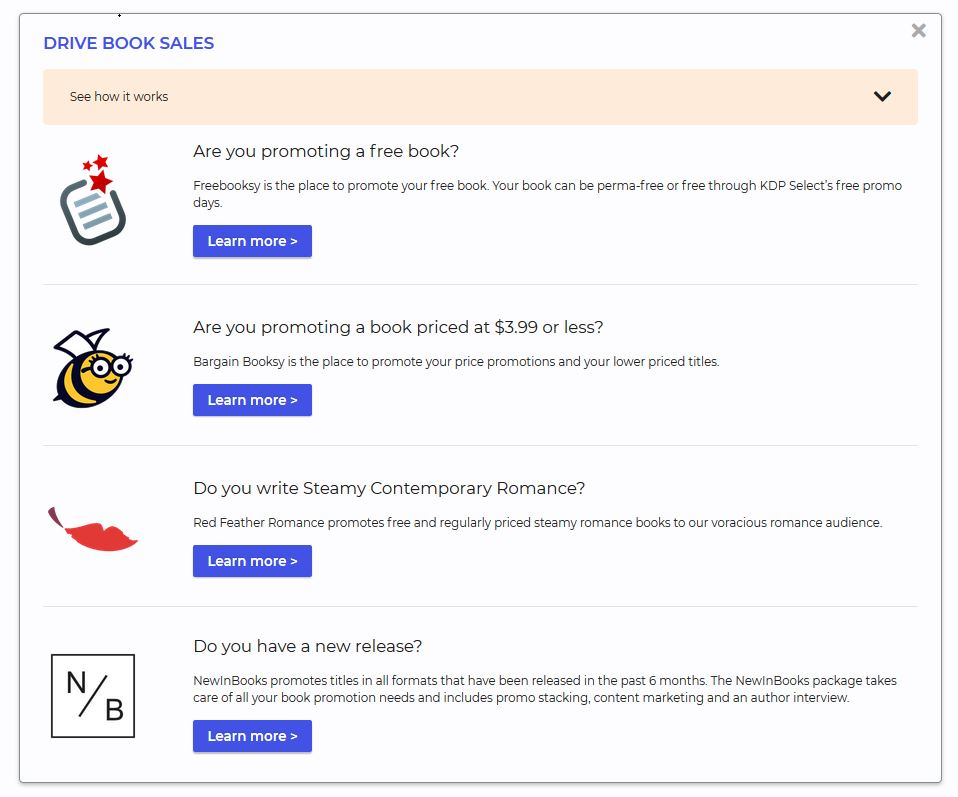
When choosing promotion partners, look for fit rather than just size. A smaller audience of highly relevant readers may be more valuable than a large audience that does not match your genre.
Before paying for any promotion, check:
- Whether the audience matches your book.
- Whether your genre performs well there.
- Whether the campaign requires a specific price point.
- Whether you need reviews before applying.
- Whether you can coordinate the campaign with your own email and social activity.
When to Use Paid Ads
Paid ads can help, but they work best when your book page, metadata, cover, reviews, and pricing are already strong.
Many authors lose money on ads because they start too early, spend too broadly, or do not track results carefully. Before running paid campaigns, make sure you understand your goal. Are you trying to sell one book, grow a series, test a new market, support a launch, or bring readers into a longer funnel?
Start small and measure:
- How much you spend.
- How many clicks you receive.
- How many sales or downloads result.
- Which audience or keyword performs best.
- Whether the campaign supports follow-on sales in a series or catalog.
Paid advertising should not replace the basics. It should amplify a book that is already ready for readers.
How PublishDrive Helps With Online Book Promotion
PublishDrive gives authors and publishers access to book promotion options directly inside the platform. These tools are designed to make it easier to plan, launch, and track promotional activity across a wider publishing strategy.
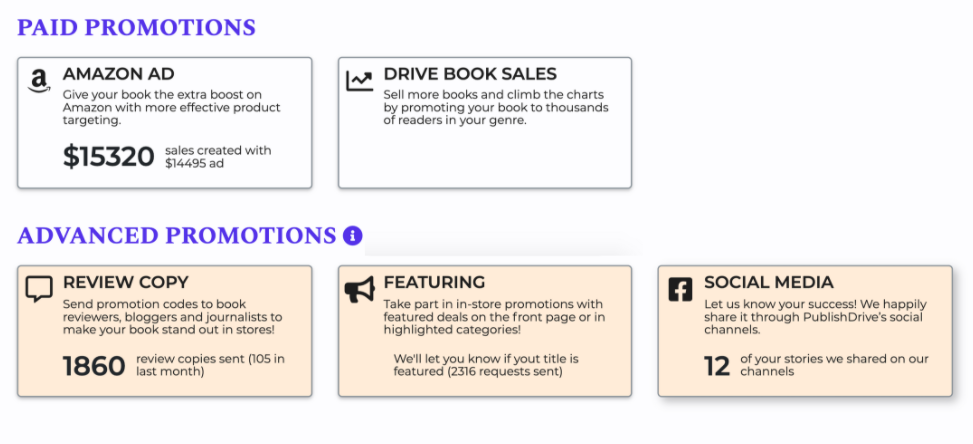
Depending on your publishing setup and title eligibility, PublishDrive promotion options can include:
- Price promotions: schedule free or discounted campaigns across selected stores.
- Review copies: share your book with reviewers, influencers, beta readers, or early supporters.
- Sales events: apply for selected retailer and seasonal promotion opportunities.
- Written Word Media opportunities: reach reader communities through relevant promotion channels.
- Book featuring: submit eligible titles for potential promotional placement.
- Amazon advertising: use targeted campaigns to increase visibility on Amazon.
You can learn more about these options on the PublishDrive book promotion services page.
Online Book Promotion Checklist
Use this checklist before launching your next campaign:
- Define your target reader.
- Check that your cover fits your genre.
- Rewrite your book description if it does not clearly hook readers.
- Review your categories and keywords.
- Make sure your author bio and store pages are complete.
- Build or update your email list.
- Prepare review copy outreach.
- Choose whether the campaign is for launch, backlist, series growth, or audience building.
- Decide whether to use a free, discounted, or full-price promotion.
- Coordinate email, social, ads, newsletter features, and store promotions in the same campaign window.
- Track results by store, format, country, and title where possible.
- Use what you learn to improve the next campaign.
FAQs About Promoting Your Book Online
What is the best way to promote a book online?
The best way to promote a book online is to combine strong book metadata, a clear target audience, reader reviews, email marketing, price promotions, social content, and relevant promotional partners. One tactic alone rarely creates long-term success. The strongest results usually come from coordinated campaigns.
When should I start promoting my book?
You should start promoting your book before launch. Ideally, begin several weeks or months in advance by preparing your book page, building your email list, reaching out to reviewers, planning preorder activity, and creating launch content. Promotion should continue after launch as part of an ongoing strategy.
Do price promotions still work for books?
Price promotions can still work when they are planned properly. A free or discounted campaign is more effective when paired with newsletter promotion, email marketing, social posts, retailer visibility, and strong metadata. Price alone is not enough if the book does not reach the right readers.
How important are book reviews for promotion?
Book reviews are very important because they help build reader trust. Reviews can improve the performance of ads, newsletter campaigns, social promotions, and store pages by giving new readers more confidence in the book.
Should I promote only on Amazon?
Amazon can be an important sales channel, but many authors benefit from reaching readers across multiple stores, formats, and countries. Wide distribution can support long-term growth by making your book available where different readers prefer to buy, borrow, or listen.
Are paid ads necessary to promote a book?
Paid ads are not always necessary, but they can be useful when your book page is ready and you have a clear goal. Authors should start with small tests, track performance carefully, and avoid relying on ads before the cover, description, reviews, and pricing are strong.
Final Thoughts
Promoting your book online is not about chasing every new tactic. It is about building a clear, repeatable system that helps the right readers discover your work.
Start with the fundamentals: know your reader, prepare your book page, improve your metadata, build reviews, grow your audience, and plan campaigns around clear goals. Then use promotion tools, price campaigns, partner opportunities, and retailer visibility to increase reach.
If you are ready to connect your book promotion strategy with wider distribution, pricing campaigns, review copies, and promotional opportunities, explore PublishDrive’s book promotion services or create a PublishDrive account.