
Best Amazon KDP Alternatives for Self-Published Authors in 2026
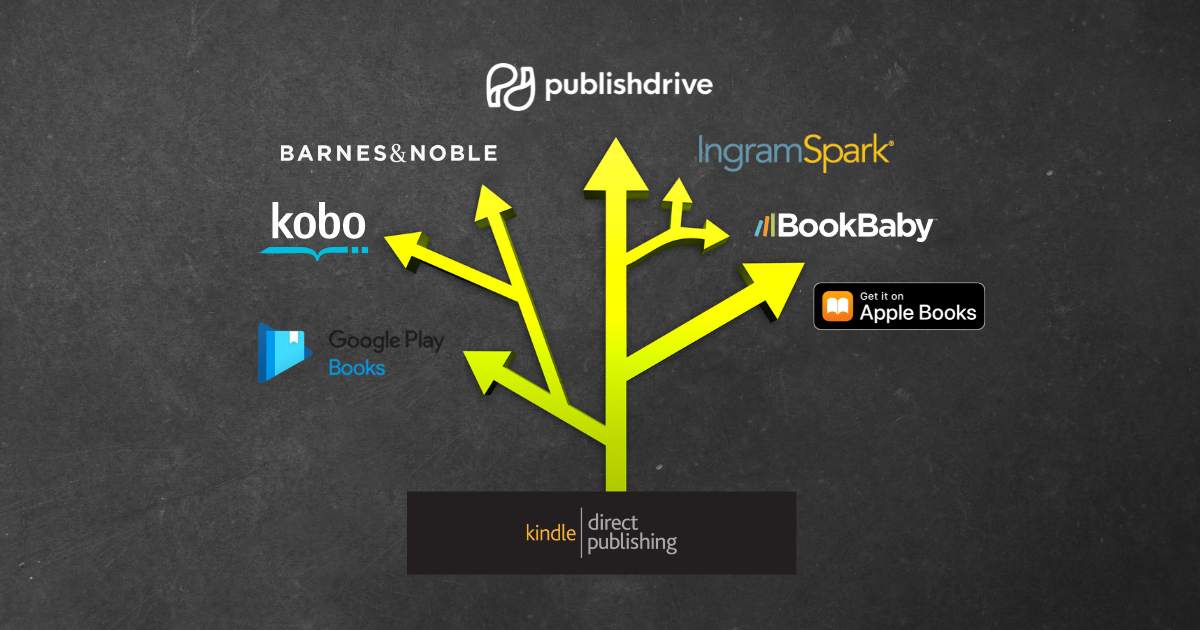
Amazon KDP is still one of the most important publishing platforms for independent authors. It gives writers direct access to Amazon’s massive reader base and can be a powerful part of a self-publishing strategy.
But Amazon does not have to be your only option.
Many authors look for Amazon KDP alternatives because they want to reach more readers, sell through more stores, access libraries, publish in more formats, avoid relying on one retailer, or build a more resilient author business.
The best alternative to KDP depends on what you want to achieve. Some authors need direct access to Apple Books, Kobo, Google Play Books, or Barnes & Noble. Others need print distribution, audiobook reach, library access, royalty management, or one dashboard for publishing wide.
This guide compares the best KDP alternatives for self-published authors and explains when each option makes sense.
Key Takeaways
- Amazon KDP is still important, but it should not always be your only sales channel. Many successful authors use Amazon as part of a broader publishing strategy.
- KDP and KDP Select are not the same thing. KDP is Amazon’s publishing platform. KDP Select is an optional ebook exclusivity program.
- Publishing wide can help authors reach readers outside Amazon. This includes Apple Books, Kobo, Google Play Books, Barnes & Noble, Ingram, OverDrive, Spotify, subscription platforms, and libraries.
- Retailers and aggregators serve different needs. Retailers sell directly to readers. Aggregators and distribution platforms help you reach multiple stores from one place.
- PublishDrive is a strong option for authors and publishers who want wide distribution from one dashboard. It can help distribute ebooks, print books, and audiobooks to 400+ stores and 240,000+ libraries worldwide.
Is Amazon KDP Still Worth Using?
Yes. Amazon KDP is still worth considering for many independent authors.
Amazon remains a major force in self-publishing, especially for ebooks and print-on-demand. For many authors, Amazon is where readers already search, buy, and discover books. That means the question is not always whether you should leave Amazon.
The better question is often this:
Should Amazon be your only publishing channel?
For some authors, an Amazon-first strategy may make sense. For others, relying only on Amazon can limit long-term growth. You may miss readers who buy from Apple Books, Kobo, Google Play Books, Barnes & Noble, libraries, subscription reading services, regional retailers, or audiobook platforms.
PublishDrive’s 2025 sales data shows that Amazon remains highly important, but it also shows why authors should pay attention to wider market behavior across formats, stores, and regions. You can read more in our analysis of Amazon book sales trends on PublishDrive and our report on where readers are buying books in 2026.
KDP vs KDP Select: Why the Difference Matters
Before choosing a KDP alternative, it is important to understand the difference between Amazon KDP and KDP Select.
Amazon KDP is the platform authors use to publish ebooks and print books on Amazon.
KDP Select is an optional program for ebooks. When an ebook is enrolled in KDP Select, Amazon requires digital exclusivity for the enrollment period. This means the ebook generally cannot be sold through other ebook retailers during that time.
KDP Select can give authors access to Kindle Unlimited and certain Amazon promotional tools, but it also limits where the ebook can be distributed.
This distinction matters because many authors can use Amazon KDP and other publishing platforms at the same time, as long as their ebook is not enrolled in KDP Select.
If you already have books on Amazon and want to know whether you can distribute through PublishDrive, read this guide: I have my books on Amazon. Can I distribute through PublishDrive?
Why Authors Look for KDP Alternatives
Authors usually look for alternatives to KDP for one or more of these reasons:
- They want to reach readers outside Amazon. Not every reader buys from Kindle or Amazon stores.
- They want access to global retailers. Apple Books, Kobo, Google Play Books, and regional stores can be valuable in different markets.
- They want library distribution. Libraries can help authors reach readers who discover books through borrowing platforms.
- They want to sell in more formats. A wide strategy can include ebooks, print books, and audiobooks.
- They want to avoid platform dependency. Relying on one retailer can create risk if policies, royalties, rankings, or visibility change.
- They want better control over a publishing business. Authors and publishers with growing catalogs often need consolidated reporting, royalty management, bulk tools, and wider distribution options.
- They want to avoid ebook exclusivity. Authors enrolled in KDP Select cannot usually distribute that ebook through other retailers during the enrollment period.
Publishing beyond Amazon does not mean Amazon is unimportant. It means building a strategy that is not limited to a single store.
For a deeper look at this strategy, read Publishing Beyond Amazon: Understanding the Real Shape of the Global Book Market.
Retailers vs Aggregators: What Is the Difference?
When comparing KDP alternatives, it helps to separate platforms into two main categories: retailers and aggregators or distribution platforms.
Retailers
Retailers sell your book directly to readers through their own stores. Examples include Apple Books, Kobo, Google Play Books, Barnes & Noble, and Amazon.
Publishing directly with a retailer can work well if you want hands-on control over that specific store. But if you publish directly to many retailers, you may need to manage separate dashboards, metadata, files, reports, tax settings, pricing, and updates.
Aggregators and Distribution Platforms
Aggregators and distribution platforms help you send your book to multiple retailers, libraries, and sales channels from one place.
This can be useful if you want wider reach without manually managing every store one by one.
PublishDrive, for example, helps authors and publishers distribute ebooks, print books, and audiobooks to a broad global network, including Amazon, Apple Books, Google Play Books, Kobo, Barnes & Noble, Ingram, OverDrive, Spotify, and many more. You can explore the full network on the PublishDrive stores page.
Quick Comparison: Best Amazon KDP Alternatives
| Platform | Type | Best For | Formats | Main Advantage | What to Consider |
|---|---|---|---|---|---|
| PublishDrive | Distribution platform | Authors and publishers who want to publish wide from one dashboard | Ebook, print, audiobook | Wide global distribution, subscription pricing, analytics, royalty management | Best suited for authors and publishers serious about wide distribution |
| Apple Books | Retailer | Authors who want to reach Apple readers | Ebook, audiobook | Strong Apple ecosystem and global storefront presence | Direct publishing may not suit every author’s workflow |
| Kobo Writing Life | Retailer | Authors targeting international ebook readers | Ebook, audiobook | Strong global ebook ecosystem, especially outside Amazon-focused markets | May require separate management if publishing direct |
| Google Play Books | Retailer | Authors who want Google and Android ecosystem reach | Ebook, audiobook | Broad global discoverability through Google’s ecosystem | Pricing and discounting require attention |
| Barnes & Noble Press | Retailer | Authors focused on US readers and print visibility | Ebook, print | Recognized US book retail brand | Less global than some other channels |
| IngramSpark | Print and distribution service | Authors who want print bookstore and library availability | Print, ebook | Strong print distribution network | Print setup, fees, and returns can require careful planning |
| Draft2Digital | Aggregator | Authors who want simple wide ebook distribution | Ebook, print through selected options | Easy setup and author-friendly tools | Commission-based model |
| BookBaby | Publishing services and distribution | Authors who want paid publishing support | Ebook, print | Publishing services, formatting, design, and distribution support | Higher upfront costs than many self-service platforms |
Best Amazon KDP Alternatives for Self-Published Authors
1. PublishDrive: Best for Publishing Wide from One Dashboard
Best for: Authors and publishers who want to distribute ebooks, print books, and audiobooks to many stores from one platform.
PublishDrive is more than a single-store alternative to KDP. It is a wide publishing platform that helps authors and publishers reach global readers through 400+ stores and 240,000+ libraries.
With PublishDrive, you can distribute to major channels such as Amazon, Apple Books, Google Play Books, Kobo, Barnes & Noble, Ingram, OverDrive, Spotify, and many other stores and library networks.
This makes PublishDrive a strong choice if you do not want to choose only one alternative to Amazon. Instead, you can build a publishing strategy that includes Amazon while also reaching readers across other retailers, regions, and formats.
PublishDrive can support:
- Ebook distribution
- Print-on-demand distribution
- Audiobook distribution
- Sales analytics and reporting
- Royalty management
- Team Royalties for co-authors and collaborators
- Book promotion opportunities
- Publishing Assistant tools for metadata and cover support
- Bulk title management for larger catalogs
PublishDrive also uses a subscription-based model, which allows authors and publishers to keep their net royalties instead of giving up a percentage of royalties on every sale.
If you want Amazon to remain part of your publishing strategy, PublishDrive can help with that too. Learn more about how to distribute to Amazon with PublishDrive.
2. Apple Books: Best for Reaching Apple Readers
Best for: Authors who want to reach readers in the Apple ecosystem.
Apple Books is one of the strongest alternatives to Amazon KDP for authors who want direct access to Apple users. Readers can discover and buy books across iPhone, iPad, and Mac devices, making Apple Books an important storefront for authors who want broader digital reach.
Apple Books can be especially useful for authors focused on ebooks and audiobooks. It is also one of the major stores authors often include in a wide publishing strategy.
Publishing directly to Apple Books may not be ideal for every author’s setup, especially if you want to manage several retailers from one dashboard. In that case, using a distribution platform can simplify the process.
PublishDrive distributes to Apple Books as part of its global store network.
3. Kobo Writing Life: Best for International Ebook Reach
Best for: Authors who want to reach ebook readers outside an Amazon-only ecosystem.
Kobo is a major ebook retailer with a strong international presence. It can be a valuable KDP alternative for authors who want to reach readers in markets where Kobo has an established audience.
Kobo is also connected to broader reading ecosystems, including subscription and partner networks. For authors publishing wide, Kobo can be an important part of a diversified ebook strategy.
Authors can publish directly through Kobo Writing Life or distribute to Kobo through a platform like PublishDrive.
4. Google Play Books: Best for Google and Android Ecosystem Reach
Best for: Authors who want to reach global readers through Google’s ecosystem.
Google Play Books is another major KDP alternative for ebook and audiobook distribution. Because Google has a broad global presence and Android devices are widely used, Google Play Books can help authors reach readers outside Amazon’s ecosystem.
Google Play Books can be valuable for discoverability, especially when authors optimize their metadata, book descriptions, categories, and pricing strategy.
Authors can publish directly to Google Play Books or use a distribution platform to manage Google Play Books alongside other retailers.
5. Barnes & Noble Press: Best for US Retail Visibility
Best for: Authors who want access to Barnes & Noble’s US book retail audience.
Barnes & Noble Press gives authors a way to publish ebooks and print books through a well-known US book retailer. For authors focused on the US market, Barnes & Noble can be a useful alternative or complement to Amazon KDP.
Barnes & Noble can be especially relevant for authors who want their books connected to a recognizable bookstore brand. However, if your goal is broad international distribution, you may still need additional retailers or a distribution platform.
6. IngramSpark: Best for Print Book Distribution
Best for: Authors who want wider print availability through bookstores, libraries, and global print channels.
IngramSpark is often compared with Amazon KDP because many authors use it for print distribution. It can help make print books available through Ingram’s distribution network, which is important for authors and publishers who want bookstore or library ordering options.
IngramSpark can be a strong option for print-focused publishing, but authors should carefully review setup requirements, print costs, wholesale discounts, return settings, and distribution terms.
PublishDrive also offers print-on-demand distribution through Ingram, giving authors and publishers another way to include print as part of a wider publishing workflow.
7. Draft2Digital: Best for Simple Wide Ebook Distribution
Best for: Authors who want a simple aggregator for ebook distribution.
Draft2Digital is a popular aggregator that helps authors distribute ebooks to multiple stores. It is known for ease of use, formatting tools, and a straightforward author experience.
For authors who want to move beyond Amazon without managing every retailer separately, Draft2Digital can be a practical option.
The main thing to consider is the pricing model. Draft2Digital uses a commission-based structure, while PublishDrive offers subscription-based pricing for authors and publishers who prefer to keep their net royalties. Learn more about PublishDrive vs Draft2Digital
8. BookBaby: Best for Authors Who Want Paid Publishing Services
Best for: Authors who want publishing services as well as distribution.
BookBaby offers ebook and print distribution along with paid services such as editing, design, formatting, and marketing support. This can appeal to authors who want more hands-on help preparing and publishing their books.
BookBaby can be useful for authors who prefer a service-based publishing experience, but it may involve higher upfront costs than self-service platforms or subscription-based distribution tools.
Can You Use Amazon KDP and Other Platforms at the Same Time?
Yes, in many cases.
You can often publish on Amazon KDP and other platforms at the same time, as long as your ebook is not enrolled in KDP Select.
If your ebook is enrolled in KDP Select, Amazon requires ebook exclusivity during the enrollment period. That means you generally cannot sell the digital version of that book through Apple Books, Kobo, Google Play Books, Barnes & Noble, PublishDrive, or other ebook retailers while the enrollment is active.
If your book is not enrolled in KDP Select, you can usually use Amazon as one part of a wider strategy.
This means you do not always have to choose between Amazon and wide distribution. You can use Amazon while also reaching other stores, libraries, subscription platforms, and international markets.
When Should You Choose a Direct Retailer?
Choosing a direct retailer can make sense if you want to focus heavily on one specific store and manage that relationship yourself.
For example:
- Choose Apple Books if Apple readers are central to your audience.
- Choose Kobo Writing Life if you want direct control over Kobo distribution.
- Choose Google Play Books if you want to manage your presence in Google’s book ecosystem directly.
- Choose Barnes & Noble Press if you are focused on the Barnes & Noble audience.
Direct publishing can be a good fit if you have the time and resources to manage each platform separately.
However, if you want to update metadata, pricing, files, reports, and payments across many stores, using multiple direct dashboards can become time-consuming.
When Should You Choose an Aggregator or Distribution Platform?
An aggregator or distribution platform can make more sense if you want to reach many stores without managing each one separately.
This is especially useful if you:
- Have several books or a growing catalog
- Want to distribute ebooks, print books, and audiobooks
- Want access to retailers and libraries from one dashboard
- Need consolidated sales reporting
- Want royalty management tools
- Work with co-authors, translators, illustrators, or other collaborators
- Want to scale beyond one retailer
For authors and publishers building a long-term business, wide distribution is not only about reaching more stores. It is also about building a publishing operation that is easier to manage as your catalog grows.
What the 2025 Sales Data Says About Publishing Beyond Amazon
Amazon remains a major sales channel for independent authors and publishers. But PublishDrive’s 2025 data also shows that book sales are not moving in only one direction.
Different formats, regions, and stores are growing in different ways. Print, audiobooks, libraries, subscription reading, and international storefronts all matter when authors think about long-term growth.
The lesson is not that authors should ignore Amazon.
The lesson is that authors should understand where readers are buying books and avoid building their entire publishing strategy around one retailer alone.
If you want a data-led view of the wider market, read:
- Amazon Book Sales Trends on PublishDrive
- Where Readers Are Buying Books in 2026
- Publishing Beyond Amazon
Which KDP Alternative Is Best for You?
The best KDP alternative depends on your publishing goals.
| Your Goal | Best Option to Consider |
|---|---|
| I want wide distribution from one dashboard | PublishDrive |
| I want to keep Amazon but expand beyond it | PublishDrive |
| I want to reach Apple readers | Apple Books |
| I want international ebook reach | Kobo Writing Life |
| I want Google and Android ecosystem reach | Google Play Books |
| I want US retail visibility | Barnes & Noble Press |
| I want print bookstore and library availability | IngramSpark |
| I want a simple commission-based aggregator | Draft2Digital |
| I want paid publishing services and support | BookBaby |
Why Publish Wide?
Publishing wide means making your book available through multiple retailers, libraries, and sales channels instead of relying on one platform.
A wide strategy can help authors:
- Reach more readers across different stores and countries
- Reduce dependency on one retailer
- Build a stronger long-term author brand
- Access library and subscription reading ecosystems
- Sell in multiple formats
- Test different markets, pricing strategies, and promotional opportunities
- Manage growth across a larger catalog
Publishing wide can be more work if you do everything manually. That is why many authors use a distribution platform to simplify the process.
With PublishDrive, authors and publishers can manage wide distribution from one platform while keeping control of their publishing strategy.
Final Thoughts: The Best KDP Alternative May Be a Wider Publishing Strategy
Amazon KDP is still important. For many authors, it will remain a valuable sales channel.
But the strongest publishing strategy is not always about choosing one platform and ignoring the rest. It is about understanding where your readers are, how they buy books, and how you can reach them across formats, regions, and stores.
If you want to publish beyond Amazon, the best KDP alternative may not be a single retailer. It may be a wider publishing setup that includes Amazon, Apple Books, Kobo, Google Play Books, Barnes & Noble, libraries, subscription platforms, print channels, and audiobook stores.
PublishDrive helps authors and publishers manage that kind of wide strategy from one dashboard.
Explore PublishDrive’s global store network or learn how to distribute to Amazon with PublishDrive.
Frequently Asked Questions About KDP Alternatives
What is the best alternative to Amazon KDP?
The best alternative depends on your goals. PublishDrive is a strong option for authors and publishers who want to distribute ebooks, print books, and audiobooks to multiple stores from one dashboard. Apple Books, Kobo, Google Play Books, Barnes & Noble Press, IngramSpark, Draft2Digital, and BookBaby can also be good options depending on your format, market, and publishing strategy.
Can I publish on Amazon KDP and other platforms at the same time?
Yes, in many cases. Authors can usually publish on Amazon KDP and other platforms at the same time unless their ebook is enrolled in KDP Select, which requires ebook exclusivity with Amazon during the enrollment period.
Is KDP Select the same as Amazon KDP?
No. Amazon KDP is the publishing platform. KDP Select is an optional program that gives authors access to Kindle Unlimited and certain promotional tools, but it also requires ebook exclusivity with Amazon while the book is enrolled.
What is the difference between a retailer and an aggregator?
A retailer sells your book directly to readers through its own store. An aggregator or distribution platform helps you send your book to multiple retailers, libraries, and sales channels from one place.
Do I need to leave Amazon to publish wide?
No. Publishing wide does not always mean leaving Amazon. Many authors use Amazon as one part of a wider strategy that also includes Apple Books, Kobo, Google Play Books, Barnes & Noble, libraries, and other sales channels.
Is PublishDrive an alternative to Amazon KDP?
PublishDrive can be used as an alternative to publishing only through Amazon KDP, but it can also support a wider strategy that includes Amazon along with other retailers, libraries, and subscription platforms.
Can PublishDrive distribute books to Amazon?
Yes. PublishDrive can help authors and publishers distribute ebooks, print-on-demand books, and audiobooks to Amazon, along with many other retailers, libraries, and sales channels.
Which KDP alternative is best for print books?
For print books, authors often compare options such as IngramSpark, Barnes & Noble Press, BookBaby, and PublishDrive. The best choice depends on whether you want bookstore and library distribution, direct retail access, or multi-channel print distribution from one platform.
Which KDP alternative is best for ebooks?
Apple Books, Kobo, Google Play Books, Barnes & Noble Press, Draft2Digital, and PublishDrive can all be useful ebook options. If you want to manage many ebook stores from one dashboard, a distribution platform like PublishDrive can simplify the process.
Why should self-published authors consider publishing beyond Amazon?
Publishing beyond Amazon can help authors reach readers in more stores, reduce reliance on one retailer, access libraries and subscription platforms, and build a more resilient long-term publishing business.